
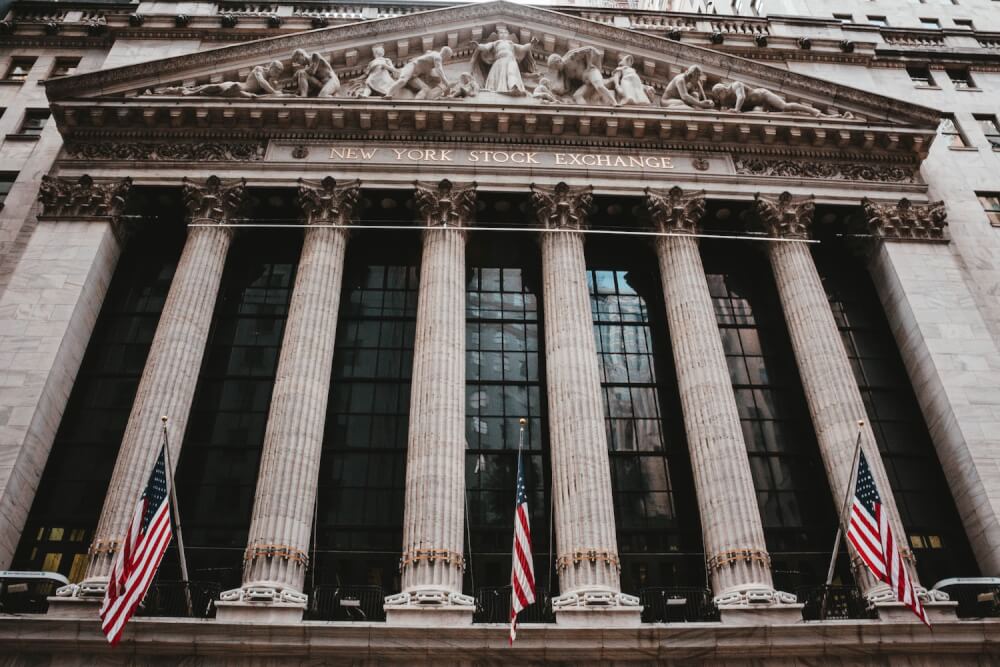
How Closely Is NYSE Working With Avalanche?
The New York Stock Exchange has spent roughly a year testing Avalanche technology and examining how the blockchain could integrate with its existing systems, according to Ava Labs President Charley Cooper.
He described the relationship as a “close working relationship,” but stopped short of saying NYSE had selected Avalanche for its planned tokenized-securities platform.
“I leave it to the NYSE guys to talk publicly about where they are in the whole process,” Cooper said at the Avalanche Summit in New York.
ICE Head of Strategic Initiatives Michael Blaugrund also discussed the work publicly, saying the exchange operator is “very engaged” with the Avalanche team as it assesses blockchain infrastructure.
“Avalanche checks a lot of those boxes for us,” Blaugrund said.
The comments provide one of the clearest indications yet that Avalanche is being actively evaluated by one of the world’s largest exchange operators, but they do not amount to a formal technology selection.
What Is NYSE Building for Tokenized Stocks?
NYSE said in January that it was developing a platform for trading and onchain settlement of tokenized U.S. equities and exchange-traded funds, subject to regulatory approval.
The proposed system would combine NYSE’s Pillar matching technology with blockchain-based post-trade infrastructure. Importantly, the design is intended to support multiple blockchains for settlement and custody rather than locking the platform into a single network from the outset.
That makes the distinction between testing Avalanche and selecting Avalanche important. Ava Labs may be deeply involved in the development process while NYSE continues evaluating other networks or maintains a multichain model.
ICE added another piece to that infrastructure strategy in August by agreeing to work with tZERO on tokenized-securities technology. tZERO was named as a design partner for the planned NYSE-affiliated platform, but ICE has still not publicly identified which blockchain or blockchains will ultimately support settlement.
Investor Takeaway
Avalanche has not been confirmed as NYSE’s blockchain, but a year of testing with ICE puts the network inside a serious institutional evaluation process. For AVAX investors, the more important milestone would be whether that testing turns into production infrastructure, settlement activity or a formal commercial role.
Why Would an NYSE-Avalanche Integration Matter?
A production role for Avalanche would place the network inside infrastructure connected to tokenized versions of some of the world’s most heavily traded securities.
The opportunity extends beyond placing stocks on a blockchain. Tokenized securities can potentially support faster settlement, programmable ownership and trading outside conventional market hours, while still relying on the regulated market structure surrounding the underlying assets.
For Avalanche, institutional usage of that kind would differ materially from crypto-native applications built around decentralized finance or token trading. The network would instead be competing as financial-market infrastructure for regulated securities.
That competition is becoming more important as traditional exchanges, clearing firms, banks and tokenization providers test different blockchain architectures. NYSE’s multichain approach also means several networks could ultimately participate rather than one blockchain capturing the entire system.
Could Tokenized Stocks Accelerate 24-Hour Trading?
Cooper expects some trading venues to begin offering 24-hour weekday trading within roughly a year, although he cautioned that the earliest adopters may not be the world’s largest established exchanges.
“Will that be the mainstream exchanges? The largest in the world? The LSEs, the NYSEs, the CMEs? I don’t know about that,” he said.
He pointed instead to smaller venues attempting to attract liquidity through onchain markets and extended trading hours.
“There are a lot of smaller venues that are making a very compelling case to the world to put liquidity on them,” Cooper said.
The regulatory environment could make those experiments easier. New SEC measures allowing certain onchain trading structures for tokenized securities could give market operators more room to test blockchain-based models, although larger exchanges are likely to move more cautiously because of clearing, custody, surveillance and market-structure requirements.
For now, Avalanche’s role remains at the testing and integration stage. The next question is whether NYSE converts that work into a formal production deployment — and whether Avalanche becomes one of the blockchains supporting the exchange’s attempt to move U.S. securities trading and settlement onchain.