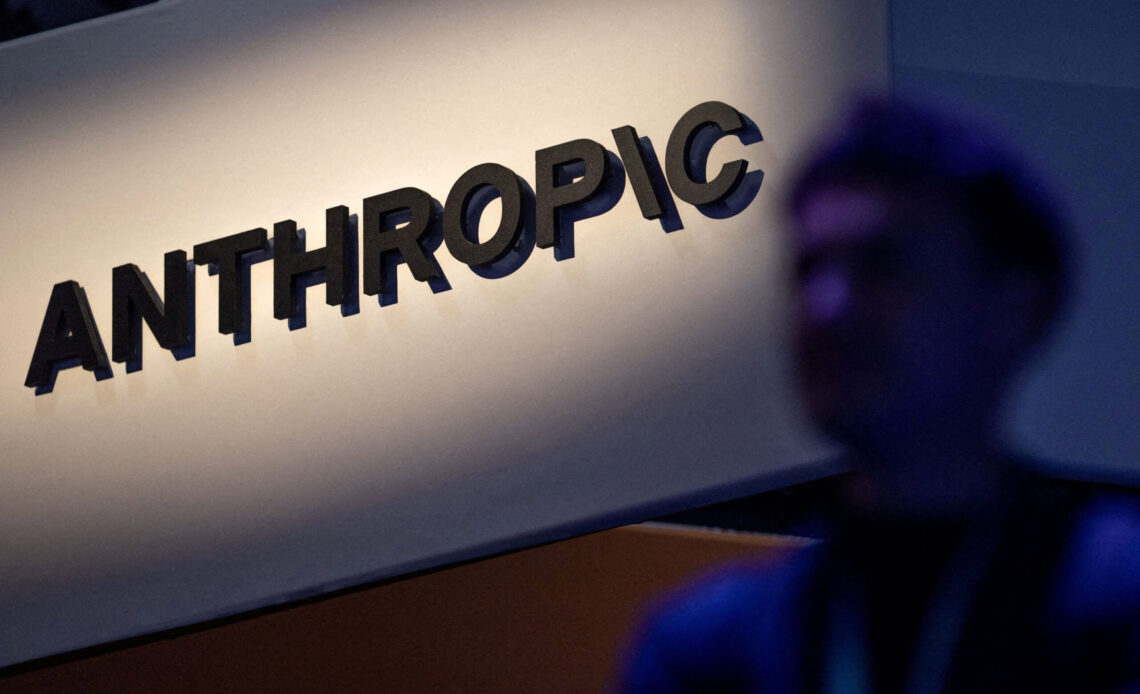
Anthropic’s anticipated mid-November IPO is becoming a race for investor capital as rival OpenAI seeks to secure roughly $30 billion in private funding before public markets get their first detailed look at the Claude developer’s finances.
Reuters reported on October 19 that OpenAI was accelerating fundraising discussions at a potential valuation exceeding $1.4 trillion. Three days later, TechCrunch reported, citing CNBC, that negotiations involved a lower $1.25 trillion pre-money valuation. Neither figure represents a completed financing.
The timing is significant. Both companies are approaching institutional investors that must decide how much capital to allocate to competing AI developers, just as rising infrastructure costs and weaker technology markets intensify scrutiny of trillion-dollar valuations.
Anthropic IPO Timeline Points to November, but the S-1 Is Still Missing
Anthropic confirmed on June 1 that it had confidentially submitted a draft S-1 registration statement to the Securities and Exchange Commission. The company did not establish an offering price, share count or listing date.
The IPO timetable has shifted repeatedly. Following an institutional investor presentation on October 14, Reuters reported on October 22 that Anthropic was pressing ahead with a potential mid-November listing and could begin its formal roadshow during the week of November 9.
Yahoo Finance reported that the public prospectus could appear as early as October 23, while other reporting pointed toward October 26. As of October 24, the latest available coverage still described the public S-1 as pending, with no confirmed filing announcement from Anthropic.
Under the SEC’s confidential submission framework, registration materials generally must become public at least 15 calendar days before a formal roadshow. A November 9 launch would therefore require disclosure by October 25, making October 23 the preceding business-day filing opportunity.
A later public filing would not automatically eliminate a November IPO, but it could require adjustments to the roadshow schedule.
The distinction matters because the mid-November target is based on reporting from people familiar with the plans, not an official company commitment.
OpenAI’s $30 Billion Round Has Two Different Valuation Figures
Reuters reported on October 19 that OpenAI was pursuing approximately $30 billion at a potential valuation above $1.4 trillion, citing two people familiar with the discussions.
SoftBank Group, Abu Dhabi investment firm MGX and other existing investors were reportedly in talks to participate. No final terms had been agreed.
On October 22, TechCrunch reported that OpenAI was negotiating a round of up to $30 billion at a $1.25 trillion pre-money valuation, with Coatue Management and investors from the United Arab Emirates among the prospective participants.
The reports reflect different negotiating snapshots rather than two completed transactions. The $1.25 trillion pre-money figure would imply a post-money valuation of approximately $1.28 trillion if the full $30 billion were raised at those terms.
That is below the more than $1.4 trillion valuation discussed in the earlier Reuters report, but still substantially above OpenAI’s $852 billion post-money valuation following its March financing.
FinanceFeeds examined the lower OpenAI valuation on October 23, including how infrastructure financing costs and investor caution are affecting negotiations.
SoftBank has already completed a separate $30 billion follow-on investment in OpenAI, according to its October 1 corporate announcement. That previously committed investment should not be confused with the newly reported fundraising discussions.
Why Closing Before Anthropic’s IPO Matters
The strategic advantage of raising money before Anthropic’s listing lies in investor allocation and price discovery.
Reuters reported that OpenAI had been meeting sovereign wealth funds and long-only investment managers while Anthropic was presenting its business to prospective IPO investors.
Investors considering both opportunities face a practical choice: commit capital to OpenAI at a privately negotiated valuation or preserve funds for Anthropic’s publicly marketed offering.
The pricing gap is increasingly important. Anthropic completed a $65 billion Series H financing in May at a $965 billion post-money valuation. Its prospective IPO valuation has since been discussed between $1.5 trillion and $2 trillion, although Reuters’ October 22 reporting emphasized approximately $1.5 trillion.
At that lower Anthropic benchmark, the company would still be seeking a valuation approximately 55% above its May funding-round price.
OpenAI’s reported $1.25 trillion pre-money figure, meanwhile, would be roughly $250 billion below a $1.5 trillion Anthropic valuation. That comparison is indicative rather than exact because financing stages, new-share issuance and the final capital structures may differ.
Closing a private round first could help OpenAI establish its valuation before Anthropic’s prospectus introduces a more detailed public-market benchmark. It would not prevent investors from subsequently questioning that valuation.
Anthropic’s Public Filing Will Test Revenue and Margin Comparisons
Anthropic disclosed substantial growth during its October 14 investor presentation, according to Reuters. Third-quarter revenue reached $16.8 billion, up 45% from $11.6 billion in the second quarter.
Reuters Breakingviews also reported an 85% gross margin and an 11% adjusted operating margin for the year through September. Those figures came from reporting on a private investor presentation, not a publicly available audited registration statement.
OpenAI, meanwhile, has reportedly been presenting approximately $50 billion in annualized revenue, with expectations that the figure could reach $70 billion by year-end.
Investors cannot directly compare OpenAI’s annualized run rate with Anthropic’s quarterly revenue without accounting for reporting periods and revenue-recognition differences.
FinanceFeeds previously reported on OpenAI’s revenue-accounting discrepancy, when a widely cited annualized figure near $68 billion was reduced to approximately $50 billion after adjusting for partner revenue.
Reuters has also reported disagreements over how the companies recognize revenue generated through third-party cloud providers.
Anthropic’s public S-1 should clarify revenue recognition, operating expenses, stock-based compensation, cash generation and infrastructure commitments. It will also help investors assess whether adjusted profitability translates into sustainable earnings.
Speculative markets have already attempted to price the offering. Euronews reported in September that Anthropic-linked perpetual futures on Hyperliquid implied valuations above $2 trillion. Those contracts were thinly traded derivatives, not actual Anthropic shares, and their implied valuations should not be treated as executable IPO prices.
Another prospectus detail concerns Anthropic’s planned public benefit fund. FinanceFeeds reported its commitment to allocate 5% of equity, subject to shareholder approval. The public filing could clarify how that commitment interacts with the eventual ownership structure.
What the AI IPO Race Means for Microsoft, Oracle and Nvidia
The consequences extend beyond investors seeking shares in either private company.
Microsoft has financial and commercial exposure to OpenAI, while Oracle’s data-center contracts make its infrastructure outlook sensitive to the AI developer’s ability to finance computing commitments. Nvidia supplies the processors underpinning AI expansion and has its own strategic investment arrangements.
Those relationships create different forms of exposure. An OpenAI valuation increase would not automatically translate into an equivalent gain for Microsoft, Oracle or Nvidia shareholders, nor would an Anthropic IPO directly establish their market values.
The broader IPO calendar is also becoming less accommodating. Reuters reported on October 22 that several AI infrastructure companies had postponed or withdrawn planned listings amid higher borrowing costs and renewed investor concerns about spending.
OpenAI is not expected to list in 2026, making its private financing the more immediate valuation test. Anthropic’s next milestones are publication of its S-1, confirmation of the roadshow and eventual offering terms.
The central question is whether public investors will support the premium implied by Anthropic’s proposed valuation. That decision could determine how convincingly OpenAI can defend its own trillion-dollar price tag before seeking a stock-market listing.