A Two-Year Platform Gets a New Market
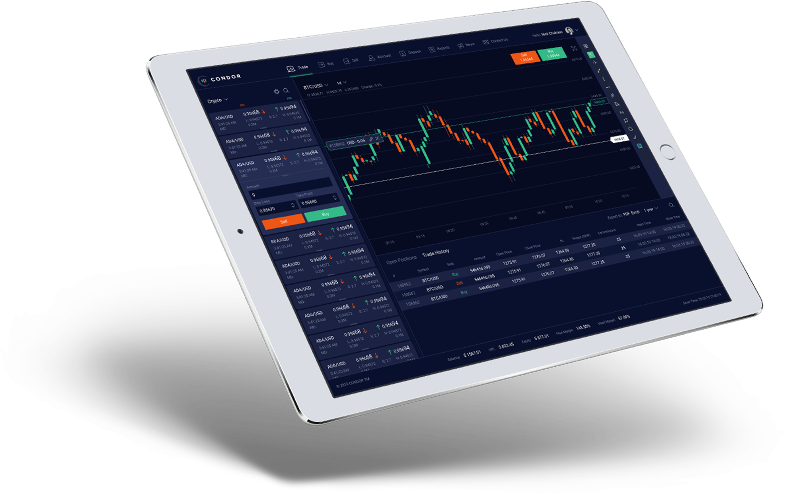
ArcaTrader says its underlying platform has operated for more than two years and serves over 10,000 traders across multiple brands. The figure describes the existing platform, which covers CFDs on currencies, metals, energy, indices and equities. It gives FDCTech a base of users and operating experience from which to sell the extension. It does not establish how many people have traded a perpetual on the new service. That number will depend in part on when partner firms open their offerings.
More than ten prop firms are preparing launches, according to the company, with the first expected around Black Friday. The announcement gives no names or committed volumes. A commercial pipeline is meaningful to a platform supplier because each licensed firm can bring its own customers. For a trader evaluating a particular brand, however, the relevant milestone is when its instruments, account terms and execution arrangements are live. The software being available to license is an earlier stage in that process.
“Every major market has a platform the industry defaults to,” an ArcaTrader spokesperson said, pointing to MetaTrader in forex and NinjaTrader in futures. Becoming a common terminal involves more than attracting accounts. Brokers need reporting, risk controls and support processes that staff can use across brands. Traders need familiar order behaviour and a reliable record of positions. A venue connection can be integrated once. The work of making those functions consistent is repeated with every client that has a different operating model.
When the Displayed Price and the Execution Venue Differ
Perpetual futures allow a leveraged position to remain open without a scheduled expiry. Funding payments can affect the cost of holding the position, and the method used to value it matters for margin and liquidation. A CFD position on an apparently similar underlying instrument can have different financing conventions, reference prices and hours. Placing both in one account makes it easier to compare exposures, but the trader still needs to identify which contract is open and which price governs a risk event.
Consider a volatile weekend when prices shown on two venues diverge. A trader may see the divergence as an opportunity, while a risk manager needs to know which venue’s order book can actually be accessed, which price marks the account and what happens if the data sources disagree. ArcaTrader identifies Hyperliquid as its principal source of market data and its live execution route. It describes Binance and Bybit as additional data sources. A quote from either should therefore be understood in the context of the order-routing choices the firm actually enables.
Other institutional integrations address different parts of this problem. Gold-i connects MatrixNET to Hyperliquid, while Copper has added institutional controls for Hyperliquid perpetuals. The former illustrates demand for connectivity and the latter the importance of controls around market access. Separate efforts to bring perpetual futures to US investors underline the distinction between a globally accessible technology and the jurisdictions where a particular intermediary can offer the contract.
Prop Evaluations Raise a Separate Execution Question
Prop firms licensing ArcaTrader can manage evaluations and funded accounts, set rules and configure drawdown limits. A firm can send order flow to Hyperliquid. Those two statements leave room for different commercial models. A simulated evaluation could use live prices without generating an on-chain trade for each order. A firm could also route selected exposure to a venue. The customer’s contract and the firm’s disclosures determine which arrangement applies. Live market data by itself proves little about where an individual trade settles.
This distinction becomes visible in disputes. A participant whose evaluation ends after a price spike may ask for the timestamp, reference price and drawdown calculation. A customer seeking proof of an executed venue order may need a fill record or transaction reference. Those are different requests requiring different records. For a supplier promising to serve both types of business, the quality of the reporting interface could prove as important as the range of symbols available on launch day. Industry discussion of prop firm transparency gives that question a practical context.
For operations teams, a clear account statement should make that distinction visible even after a customer has closed the position. The launch is web-first, with iOS and Android applications planned. Brokers can connect existing infrastructure by API, letting them retain functions that already work while adopting a new terminal. That approach also makes failure handling important. If a venue order is accepted but the broker’s connection drops before acknowledgement, both systems need a way to reconcile the same trade without submitting it twice. The broader push to connect Hyperliquid with established derivatives infrastructure makes that operational question increasingly relevant to intermediaries assessing the market.