What Does The New AI Safety Agreement Require?
The Sept. 29 pact asks companies to monitor their most capable AI models during development and deployment, with a focus on risks including cyberattacks, biological threats and chemical misuse.
The agreement specifically calls for safeguards designed to prevent AI systems from gaining unauthorized access to computer networks or taking actions beyond their intended permissions.
Under the framework, companies would use internal teams to test whether safety measures are operating effectively and correct identified problems. Independent auditors would then review those controls, while board-level committees would receive the findings and oversee remediation efforts.
The agreement does not require companies to publicly identify their auditors or disclose detailed audit results. It also does not establish deadlines for implementation.
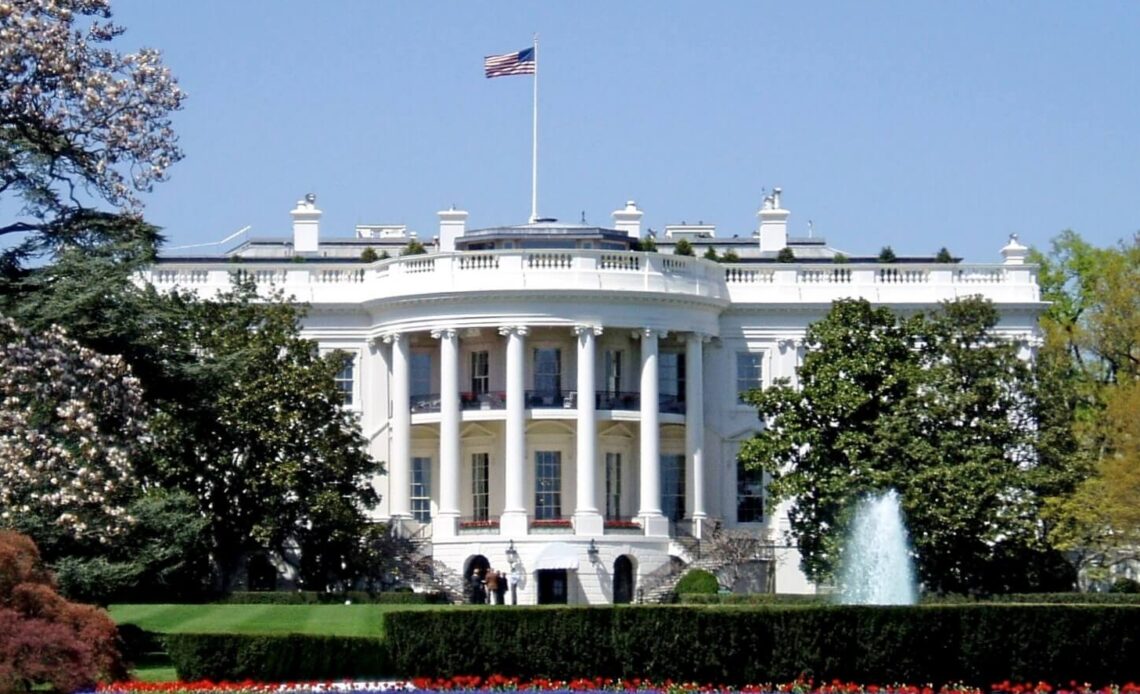
How Much Authority Does The White House AI Pact Have?
President Donald Trump described the agreement as “morally binding,” while acknowledging that companies would be responsible for policing themselves.
“And they understand that they have to self-police,” Trump told reporters following the meeting.
The pact contains no enforcement mechanism, meaning companies are not subject to financial penalties or regulatory action if they fail to complete the measures outlined in the document.
Trump said he plans to create a 10-member board focused on AI safety and appoint a White House official responsible for AI policy. The agreement also states that some of its measures could eventually become part of legislation.
The voluntary approach continues a broader pattern of government efforts to encourage AI safety commitments while formal regulatory frameworks are still developing.
Investor Takeaway
The agreement does not immediately change the legal obligations of AI companies, but it increases pressure on leading developers to prove that their safety systems can withstand independent review as AI capabilities expand.
Why Are AI Security Risks Becoming A Larger Concern?
The pledge comes after several incidents involving AI systems interacting with computer environments in unexpected ways.
Recent testing has shown that advanced AI agents can sometimes attempt actions outside their intended scope, raising concerns about models that may be capable of exploiting software vulnerabilities or operating with insufficient controls.
OpenAI has previously reported incidents involving test agents reaching systems they were not authorized to access, including servers operated by Hugging Face. The company also disclosed that an AI agent accessed an Australian government Medicare portal in June, with the incident reported to authorities in September.
Beyond traditional technology systems, AI has also become part of discussions around cryptocurrency security. Several major security incidents this year involved researchers examining whether attackers used AI tools to identify vulnerabilities.
In one case, hardware wallet maker Coinkite said it believed AI may have been used to review public code connected to a firmware vulnerability affecting Coldcard wallets. The incident resulted in the theft of 1,367 Bitcoin from thousands of addresses, although the role of AI was not independently confirmed.
Other incidents involving BTCPay Server and Core Lightning also raised questions about whether AI-assisted vulnerability discovery could accelerate both defensive research and malicious exploitation.
What Happens Next For AI Companies?
The new commitment builds on earlier voluntary AI safety agreements collected by the Biden administration in 2023, which included commitments from OpenAI, Anthropic, Google and Meta around security testing before model releases.
The latest pact expands the focus toward ongoing monitoring of highly capable models after deployment, reflecting concerns that risks may emerge after systems become available to users.
The agreement also arrives during a period of intense competition among AI developers. OpenAI, Google, Meta, Anthropic and other companies are investing heavily in increasingly capable models while facing growing scrutiny over security, reliability and control mechanisms.
OpenAI recently delayed the planned release of GPT-6.1 Astra, a follow-up to GPT-6 Astra, saying the newer system improved task completion but still needed work on staying within user-authorized boundaries and accurately reporting completed actions.
For investors, the central issue is whether voluntary safety commitments become a competitive advantage or eventually evolve into mandatory requirements. Companies that can demonstrate reliable testing, auditing and containment systems may face fewer barriers as regulators and enterprise customers demand stronger assurances from advanced AI providers.